
What Is Customer Due Diligence (CDD) and Enhanced Due Diligence (EDD)?
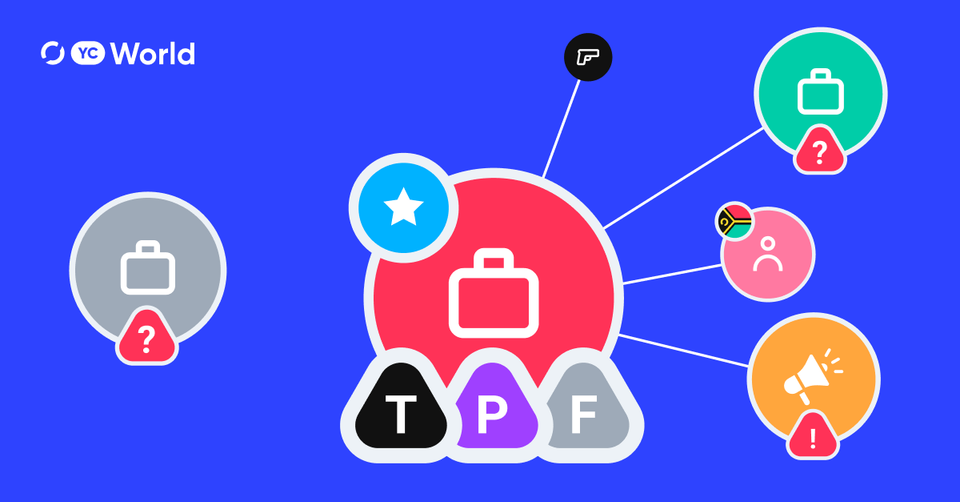
Consider an institution onboarding two new clients. One is a local manufacturing company with transparent ownership and a long operating history. The other is an international holding company registered through several offshore jurisdictions, with politically exposed persons (PEPs) appearing in its ownership chain. Applying identical verification procedures to both creates unnecessary risk.
This is when we need to know more about Customer Due Diligence (CDD) and Enhanced Due Diligence (EDD). Rather than treating every customer the same, organisations assess risk and apply different levels of verification depending on the circumstances.
What Is Customer Due Diligence (CDD)?
The Customer Due Diligence (CDD) process is the foundation of Know Your Customer (KYC) and Anti-Money Laundering (AML) compliance.
In simple terms, the customer due diligence definition refers to the process of verifying who a customer is, understanding their ownership structure, and assessing whether they present an acceptable level of risk before establishing a business relationship.
A typical customer due diligence (CDD) process includes:
- verifying the customer's identity;
- identifying Ultimate Beneficial Owners (UBOs);
- understanding the ownership and control structure;
- screening sanctions, watchlists and PEP databases;
- assessing the customer's business activities;
- assigning an initial risk rating;
- monitoring the relationship over time.
What Is Enhanced Due Diligence (EDD)?
Enhanced Due Diligence (EDD) is an expanded investigation performed when a customer presents elevated compliance, financial, or reputational risk.
The definition of EDD goes beyond verifying identity. It requires organisations to gather additional information, investigate ownership structures more deeply, understand the source of funds and wealth, and continuously monitor the relationship.
The EDD full form is Enhanced Due Diligence.
CDD vs EDD: Key Differences
CDD provides the standard level of verification for most customers, while Enhanced Due Diligence (EDD) adds deeper investigation when higher-risk relationships require additional scrutiny.
The primary difference between CDD and EDD is proportionality: the higher the risk, the more extensive the investigation should be.
When to Apply CDD vs EDD?
Risk-based compliance means not every customer requires the same level of investigation.
Use Customer Due Diligence (CDD) when:
- onboarding standard commercial customers;
- ownership is transparent;
- no sanctions or PEP exposure exists;
- business activities present low AML risk.
Apply Enhanced Due Diligence (EDD) when:
- ownership structures are unusually complex;
- beneficial ownership is difficult to determine;
- offshore entities are involved;
- the customer is connected to sanctioned individuals or jurisdictions;
- PEPs appear within the ownership chain;
- transactions are unusually large or inconsistent with the business profile;
- regulators require additional verification.
This risk-based approach allows organisations to allocate investigative resources efficiently while remaining compliant with AML regulations.
Making Customer Due Diligence Faster and More Cost-Effective
The manual process of due diligence often requires investigators to search multiple corporate registries, sanctions lists, and public databases separately. This becomes increasingly difficult when companies operate across jurisdictions or use layered ownership structures.
YC World streamlines both Customer Due Diligence and Enhanced Due Diligence by consolidating corporate connections, beneficial ownership data, sanctions, PEP information, and relationship mapping across more than 80 jurisdictions. Investigators can trace direct and indirect ownership, visualise corporate networks, identify hidden connections, and screen counterparties against global risk indicators without switching between multiple sources.
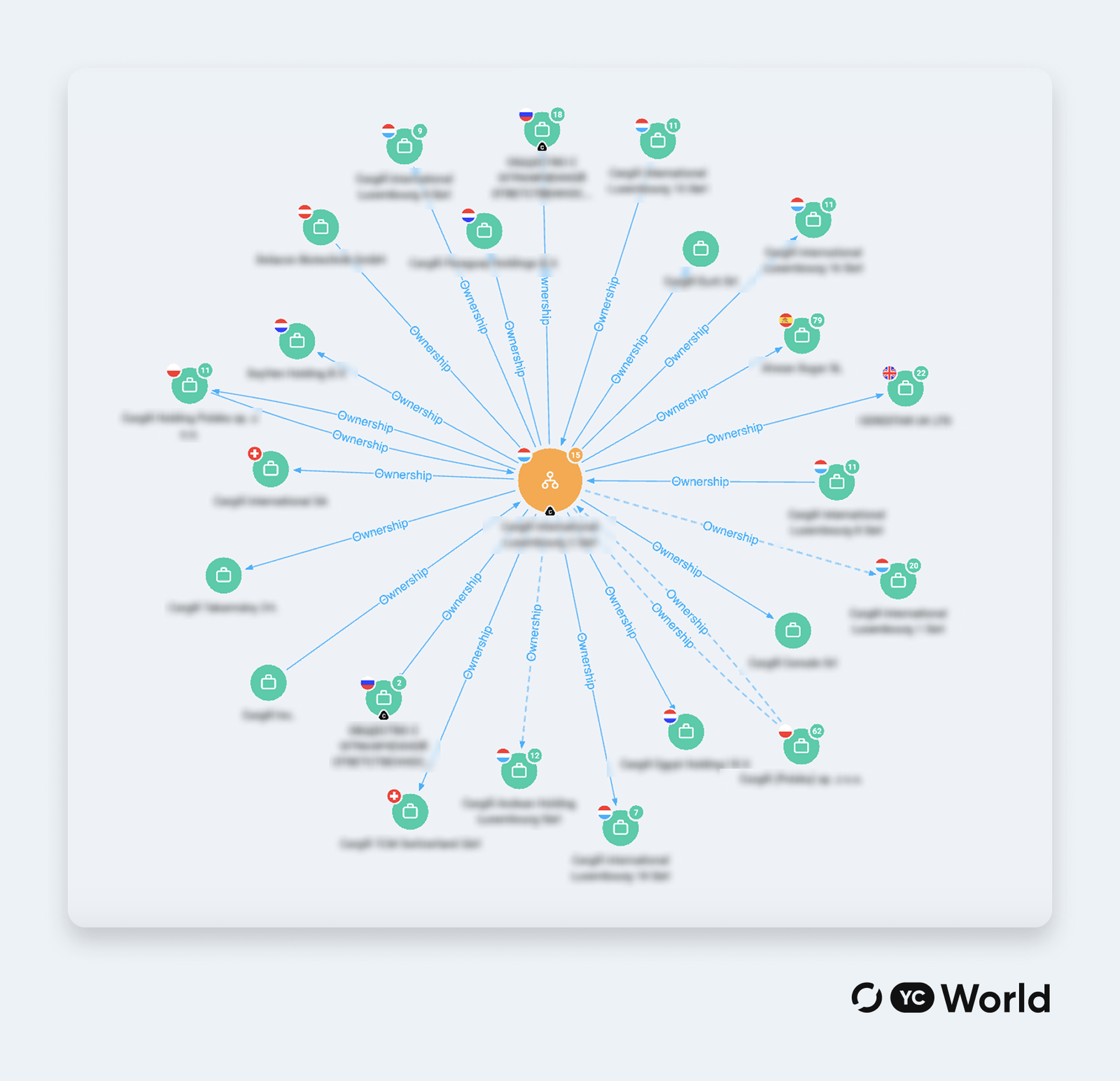
A risk-based approach to CDD and EDD allows organisations to focus resources where they matter most. It improves compliance, speeds up onboarding for low-risk customers, and ensures that higher-risk counterparties receive the level of scrutiny they require.
Schedule a Free Demo Consultation
Explore how YC World enables faster, more efficient CDD and EDD.
FAQ
What is the definition of Customer Due Diligence (CDD)?
Customer Due Diligence (CDD) is the process of verifying a customer's identity, understanding their ownership structure, assessing risk, and monitoring the business relationship to comply with KYC and AML requirements.
What is Enhanced Due Diligence (EDD)?
Enhanced Due Diligence (EDD) is a more comprehensive investigation performed for customers presenting higher financial crime, sanctions, corruption, or money laundering risks.
What is the difference between CDD and EDD?
CDD applies standard verification procedures for lower-risk customers, while EDD involves deeper investigation, additional documentation, ownership analysis, and ongoing monitoring for higher-risk relationships.
Is EDD required under AML regulations?
Yes. Most AML frameworks require organisations to apply Enhanced Due Diligence whenever customers or transactions present a higher risk of money laundering, terrorist financing, sanctions violations, or corruption.
How does YC World support CDD and EDD?
YC World helps investigators perform both CDD and EDD by mapping corporate relationships, identifying beneficial owners, screening sanctions and PEPs, analysing historical ownership changes, and uncovering hidden connections across international corporate networks.